




Astronomers Observe Unprecedented Growth in Rogue Planet
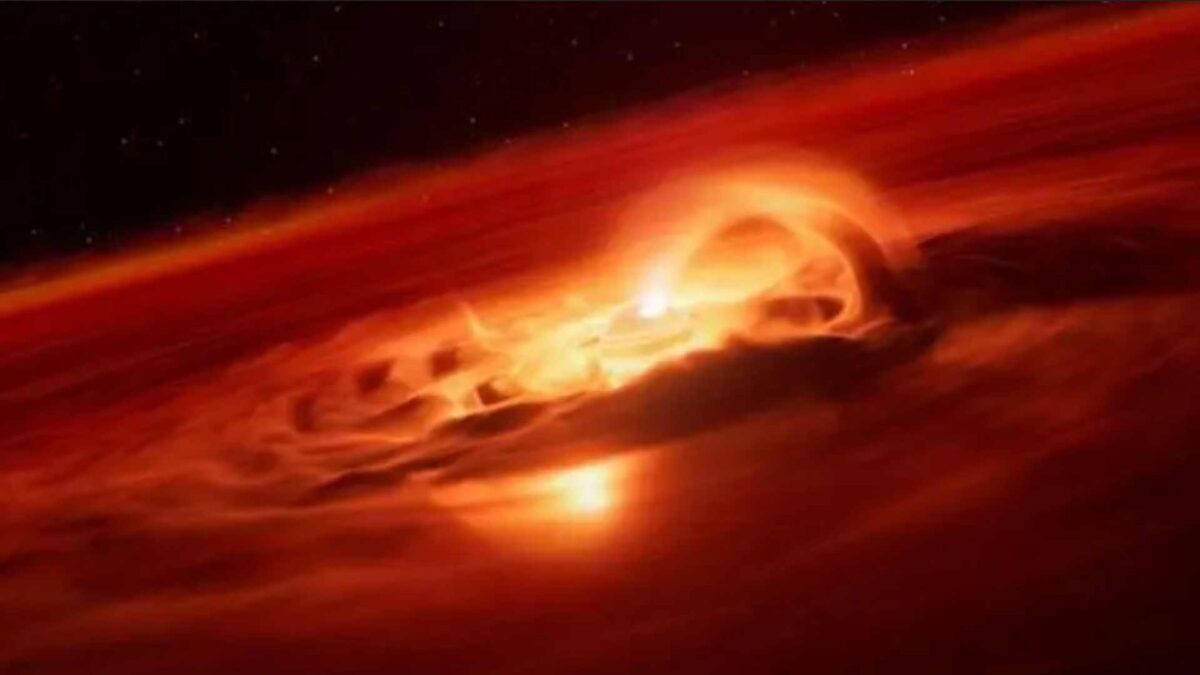
Astronomers have identified an extraordinary growth spurt in a so-called rogue planet, a type of planetary object that drifts freely through space rather than orbiting a star.
Observations made with the European Southern Observatory’s Very Large Telescope in Chile reveal that this free-floating planet is consuming surrounding gas and dust at an astonishing rate of six billion tonnes per second. This is the strongest growth ever recorded for a rogue planet or any planet-like object, providing fresh insights into how these mysterious worlds form and evolve.
The object, officially named Cha 1107-7626, is located around 620 light-years away in the constellation Chamaeleon and has a mass between five and ten times that of Jupiter. The planet is still in its formative stage and is fed by a surrounding disc of gas and dust. The research team, led by Víctor Almendros-Abad of the Astronomical Observatory of Palermo, National Institute for Astrophysics in Italy, found that the rate of accretion has not been steady, with the most recent measurements showing a dramatic increase compared with earlier observations.
“People may think of planets as quiet and stable worlds, but this discovery shows that planetary-mass objects freely floating in space can be remarkably dynamic,” said Almendros-Abad.
The study, published in The Astrophysical Journal Letters, also found evidence that magnetic activity may have helped drive the rapid infall of material. Similar bursts have previously only been seen in young stars, suggesting that even low-mass planetary objects can possess strong magnetic fields capable of powering intense accretion. The team also observed changes in the chemical composition of the planet’s disc, including the sudden appearance of water vapour during the accretion episode.
Co-author Aleks Scholz of the University of St Andrews said the findings blur the distinction between stars and planets. “This discovery gives us a window into the earliest formation periods of rogue planets and shows that some may form in a way that is more similar to stars than to conventional planets,” he said.
Astronomers hope that future instruments, such as ESO’s upcoming Extremely Large Telescope, will allow them to detect and study more free-floating planets, providing a clearer picture of these elusive objects.
Share this WeathÉire story: