

Study Challenges Long-Held Belief of Giant Arctic Ice Shelf
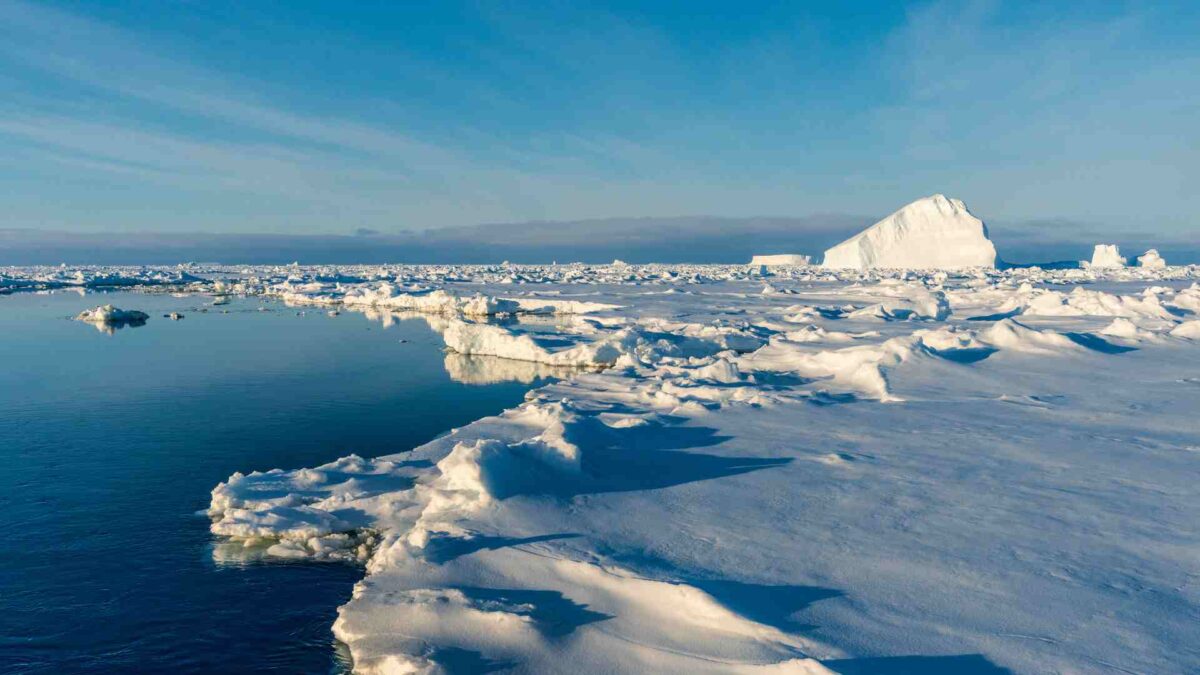
A major new international study has overturned a long-standing theory that the Arctic Ocean was once entirely covered by a giant, kilometre-thick ice shelf during Earth’s coldest periods.
Instead, researchers now say the region remained seasonally ice-covered, with open water and signs of life—even at the height of the last ice ages.
Published in Science Advances, the study offers fresh insight into how the Arctic responded to extreme climate changes over the past 750,000 years. It also provides important clues for predicting how this vulnerable region might behave in the face of today’s rapid warming.
Tiny Clues Hidden in Ancient Seafloor Sediments
The team, led by researchers from the European-funded Into the Blue project, analysed deep-sea sediment cores from the Nordic Seas and the Yermak Plateau north of Svalbard. These cores contained microscopic chemical fingerprints left by algae, including species that only grow in open water or under seasonal sea ice.
“Even during the coldest glacial periods, our evidence shows light and open water at the surface,” said Dr. Jochen Knies of UiT The Arctic University of Norway. “That wouldn’t be possible if a massive ice shelf had sealed off the entire ocean.”
A key indicator was the presence of a molecule called IP25—produced only by algae that thrive in seasonal sea ice. Its continued presence suggests that Arctic ice was not permanent, but came and went with the seasons.
Model Simulations Back Up the Findings
To support their analysis, the team ran high-resolution simulations using the AWI Earth System Model. They looked at two particularly frigid periods: the Last Glacial Maximum (around 21,000 years ago) and another cold snap about 140,000 years ago.
The model showed that even then, warm Atlantic currents flowed into the Arctic, preventing a full freeze-over and allowing life to persist under shifting, seasonal ice.
“The simulations agree with the sediment data,” said Dr. Knies. “The Arctic was never entirely locked in ice. Ice conditions fluctuated with the seasons.”
Implications for Future Arctic Change
While some earlier theories suggested the presence of a massive, continent-wide ice shelf, this study finds no long-term evidence to support that. One brief exception may have occurred around 650,000 years ago, but even then, the ice cover appears to have been temporary.
“This fundamentally changes our view of the Arctic’s past,” said Dr. Gerrit Lohmann of the Alfred Wegener Institute and co-leader of the project. “And it helps us understand the Arctic’s future.”
With the Arctic already warming nearly four times faster than the global average, the study’s findings are a timely reminder that understanding past climate responses is key to predicting what lies ahead.
Why It Matters for Ireland
Though far removed from the Arctic, Ireland is directly affected by changes in the polar regions—especially through shifts in Atlantic Ocean currents and global weather patterns. Insights like these help refine climate models that inform everything from sea-level rise to storm forecasting.