

Scientists reach for the stratosphere in solar storm study
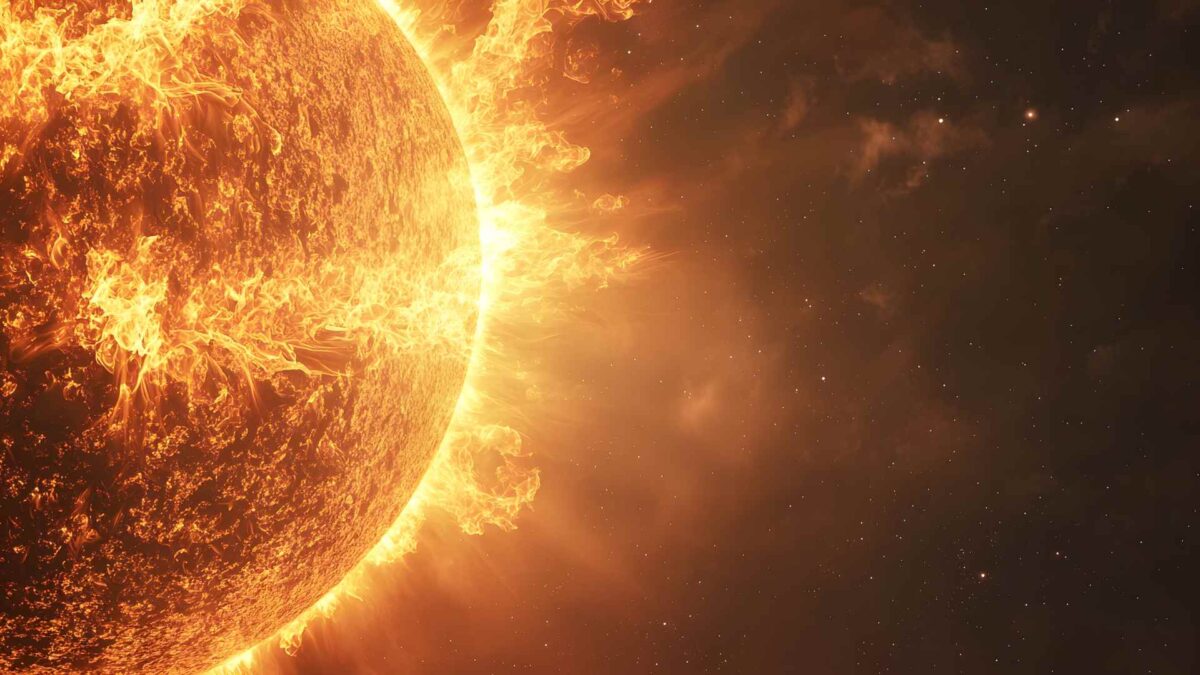
Scientists in Britain and the Netherlands have carried out the first high-altitude launches of a new type of radiation monitor designed to improve understanding of space weather and its potential impact on Earth.
Weather balloons carrying the compact sensors were released simultaneously from Met Office stations in Camborne, Cornwall, and Lerwick in the Shetland Islands, and from De Bilt in the Netherlands, which is operated by the Dutch meteorological service KNMI.
The monitors, developed by the University of Surrey, ascended to more than 30 kilometres, gathering live data on background radiation levels as they rose through the atmosphere.
The Friday (17 October) launch marked the first stage of an international research project that aims to strengthen space weather models used to predict the effects of solar storms on aviation, power networks and satellite communications. Future launches will coincide with significant solar activity, allowing scientists to track how bursts of radiation from the Sun influence the atmosphere from the stratosphere to ground level.
Krista Hammond, senior space weather manager at the Met Office, said the project represented a major step forward. “Space weather monitoring is still at an early stage compared with meteorology,” she said. “These flights will give us valuable data to validate and improve the radiation models we use, which are vital for sectors such as aviation and energy.”
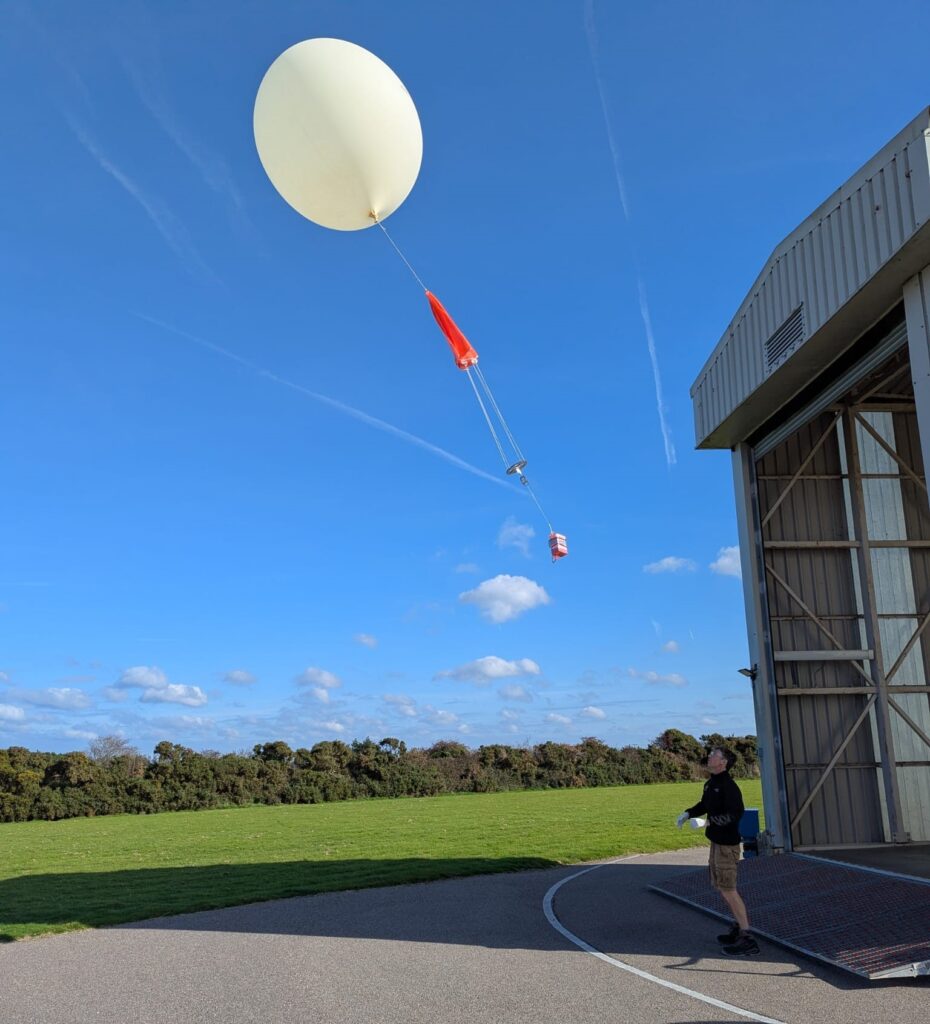
The data will feed into a new model known as MAIRE+, which is being tested at the Met Office’s Space Weather Operations Centre. Similar radiation detectors, built by the University of Surrey as part of the UK’s Space Weather Instrumentation, Measurement, Modelling and Risk (SWIMMR) programme, are already installed on some commercial aircraft to measure radiation exposure at cruising altitude.
Professor Keith Ryden, director of the Surrey Space Centre, said the new SAIRA-B detectors were designed for rapid balloon launches and could reach heights more than twice those of passenger jets. “We have been making these kinds of measurements since the 1980s, when our first instrument flew on Concorde,” he said. “With SAIRA-B, we now have a lightweight system that gives us a new way to track radiation through the atmosphere.”
The coordinated launch with KNMI extends the experiment across different latitudes, offering a broader picture of how radiation levels vary. Maarten van Aalst, director general of KNMI, said the joint work showed “how international collaboration can enhance research and improve the services we provide, such as aviation warnings during space weather events”.
The initiative is part of the UK government-funded SWIMMR programme, managed by the Science and Technology Facilities Council, which supports projects to strengthen forecasting and resilience to solar activity. Professor Ian McCrea of STFC RAL Space said the combination of balloon-borne sensors and ground-based neutron monitors would be crucial in validating the UK’s radiation models.
A recent assessment suggested that the Met Office’s growing space weather capability could deliver economic benefits worth about £600 million to the UK energy sector over the next decade.
Share this WeathÉire story: