

UCD scientist elected spokesperson for international space mission
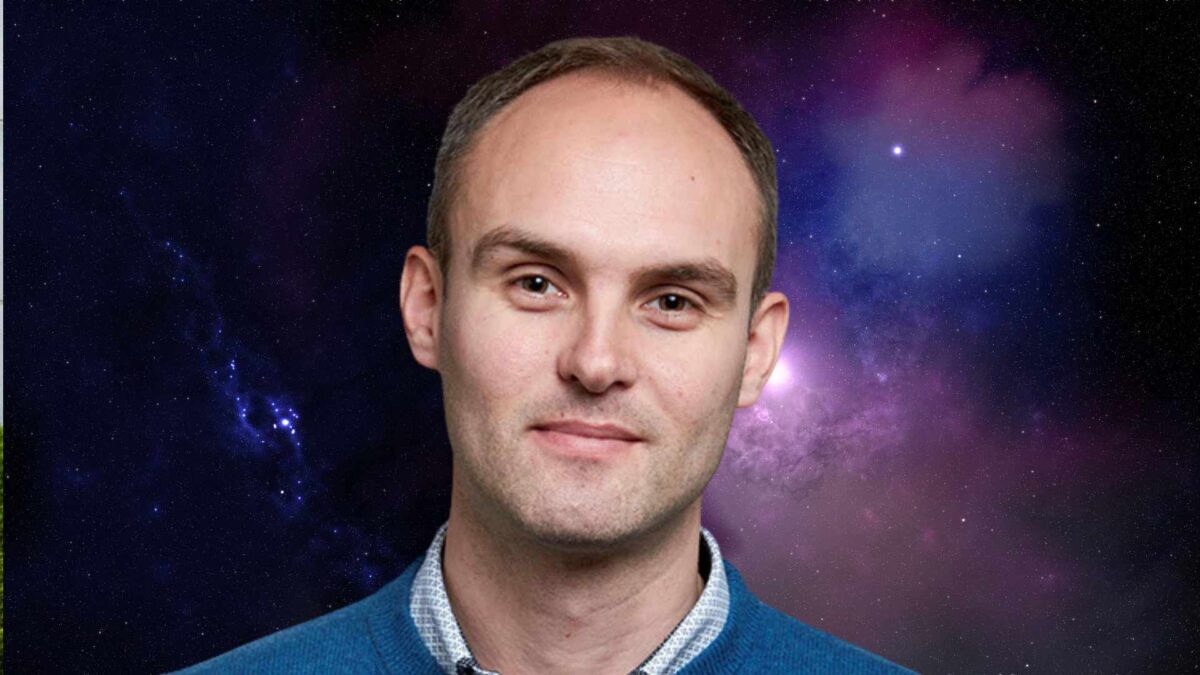
Dr Niels Warburton from University College Dublin has been elected spokesperson of the LISA Consortium, an international network of about 1,000 scientists supporting the European Space Agency’s (ESA) Laser Interferometer Space Antenna mission.
Known as LISA, the mission will detect gravitational waves, tiny ripples in space and time, caused by dramatic cosmic events such as the collision of supermassive black holes. It is the first project of its kind to search for these signals from space.
Led by the ESA with contributions from NASA and several European space agencies, the mission is one of the most ambitious scientific collaborations ever undertaken in astrophysics.
Dr Warburton said it was an honour to take on the role after spending his entire research career working on LISA science.
“With the adoption of LISA by the ESA in 2024, it’s an exciting time for the mission. There’s a lot of energy in the community and everyone I know who works on it is extremely busy preparing for launch,” he said. “Over the next two years, I look forward to working with and growing this community of scientists, researchers and engineers.”
The UCD Relativity Group, part of the university’s School of Mathematics and Statistics, hosted 400 researchers last year for the International LISA Symposium. The group studies black holes, gravitational waves and other areas of theoretical physics, and plays a central role in Ireland’s contribution to the mission.
Two of Dr Warburton’s colleagues have also taken on leading roles in the consortium. Dr Chris Kavanagh has been elected co-chair of the LISA Waveform Working Group, which develops models of the gravitational wave signals the mission will detect. Dr Barry Wardell has received a European Research Council Advanced Grant for his research on LISA-related science.
Share this WeathÉire story: