




Sleeping Giant: Black Hole Reawakens in Distant Galaxy
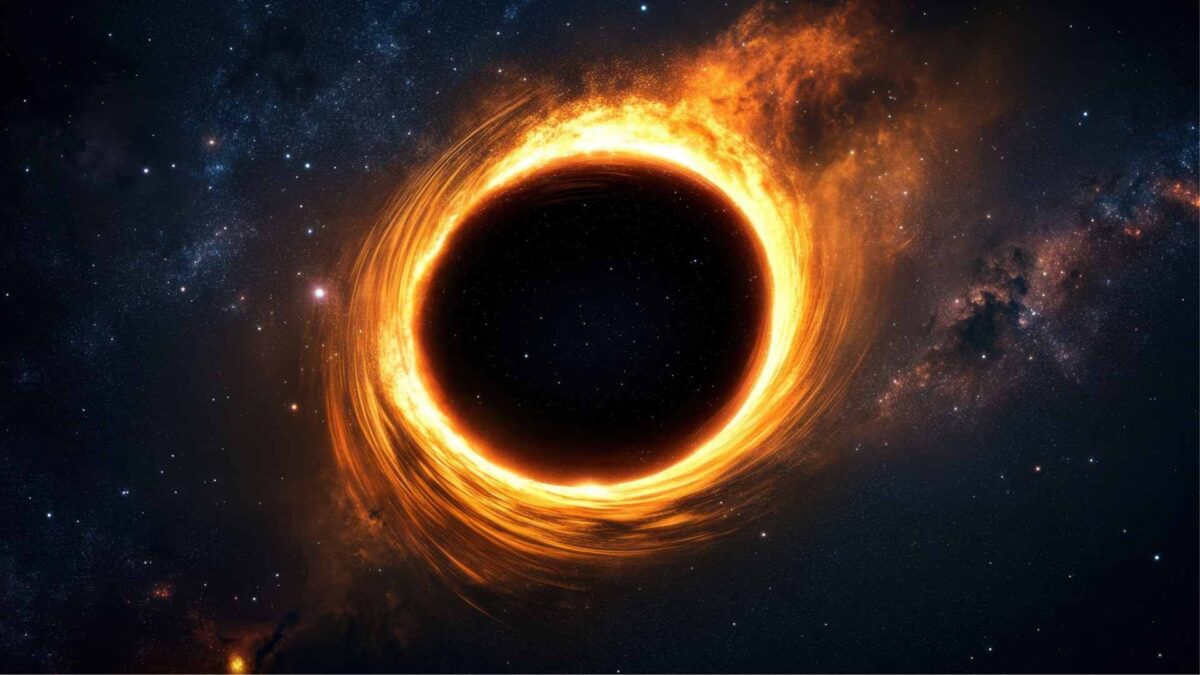
Astronomers have uncovered compelling evidence that supermassive black holes can reawaken after long periods of apparent inactivity, following the discovery of a rare stellar disruption event far from the centre of a galaxy.
The event, designated AT2024tvd, involved a black hole tearing apart a star and then launching powerful outflows of material months later. The delayed and rapidly evolving radio flares mark the fastest such emissions ever recorded from a black-hole-driven tidal disruption event.
Led by Dr Itai Sfaradi and Professor Raffaella Margutti of the University of California, Berkeley, the international research team included scientists from the United States, Europe and Israel. Among them was Professor Assaf Horesh of the Hebrew University of Jerusalem, whose team played a key role in the radio observations.
“This is truly extraordinary,” said Dr Sfaradi. “Never before have we seen such bright radio emission from a black hole tearing apart a star away from a galaxy’s centre, and evolving this fast. It changes how we think about black holes and their behaviour.”
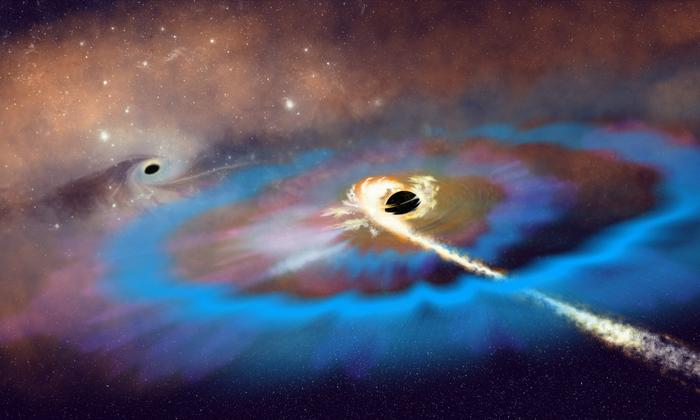
The black hole was located about 2,600 light-years from its host galaxy’s core, challenging the long-held assumption that supermassive black holes reside exclusively in galactic centres.
Radio data collected from telescopes including the Very Large Array, ALMA and the UK’s AMI-LA revealed two distinct flares, each unfolding months apart. The findings suggest that black holes can remain dormant after a violent event and then erupt again unexpectedly, pointing to complex and previously unknown mechanisms in how they release energy.
Professor Horesh described the discovery as one of the most fascinating he has been part of, and noted the significance of his former student leading the research. “It is another scientific achievement that places Israel at the forefront of international astrophysics,” he said.
The study, which also includes contributions from Professor Paz Beniamini of the Open University of Israel, will be published in The Astrophysical Journal Letters.
Share this WeathÉire story: