



Galileo telescope mystery uncovered by Irish researcher
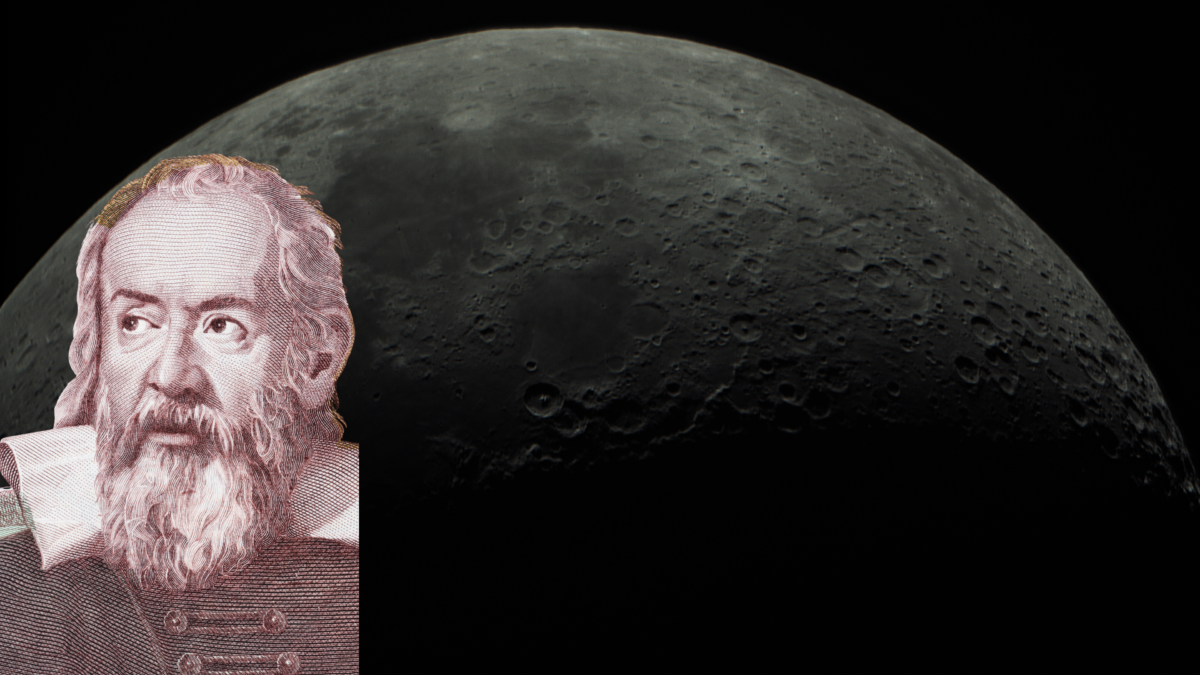
A discovery by an Irish-based researcher could change understanding of the early development of telescopes, after a previously unknown 17th-century manuscript emerged suggesting that Galileo Galilei may have experimented with a four-lens telescope more than a decade earlier than previously believed.
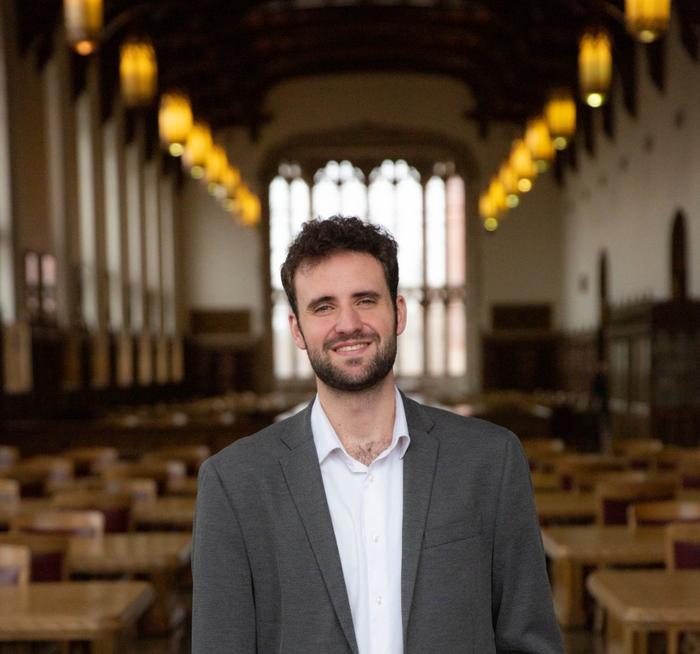
Dr José María Moreno Madrid, a researcher at the University of Limerick’s School of History and Geography, discovered the document while examining a 1666 manuscript written by Spanish Dominican friar Ignacio Muñoz.
The manuscript contains a detailed technical description of a four-lens terrestrial telescope, attributed to Galileo through the Latin phrase fabricatum a Galilaeo, meaning manufactured by Galileo.
If the attribution is correct, it would indicate that Galileo was experimenting with four-lens telescopes by 1630 at the latest, significantly earlier than the earliest examples currently documented, which date from around 1643 to 1645.
The research, published in the journal Annals of Science, could also provide the most detailed technical analysis yet of a telescope attributed to the celebrated Italian astronomer.
Dr Moreno Madrid said the discovery raised important questions about the history of telescope development.
“If, as the text claims, the telescope analysed was indeed manufactured by Galileo, then the earliest known experimentation with four-lens telescopes would have to be pushed back to 1630 at the latest and credited to him,” he said.
“Moreover, Muñoz’s De Tellescopiis Stellarum would become the most detailed technical analysis of a telescope provenly made by Galileo.”
The manuscript describes how Muñoz was presented with the instrument by Antonio Sebastián de Toledo Molina y Salazar, the Viceroy of New Spain and Marquis of Mancera, as a test of his scientific abilities.
Muñoz had been exiled to Portuguese India following an attempt to establish a new Dominican religious order in the Philippines. He subsequently wrote to King Philip IV of Spain offering a proposal to improve the performance of the Spanish fleets through advances in navigation.
In return, he sought royal sponsorship for his journey home, travelling via the Manila Galleon and its customary stopover in New Spain.
The viceroy was suspicious of Muñoz’s scientific claims and ordered him to examine the telescope in detail before deciding whether his proposals deserved royal support.
Muñoz’s resulting account included a component-by-component description and diagrams of a reverse-tapered four-lens terrestrial telescope with an erecting eyepiece. The lenses were convex and separated by twice their focal lengths.
The potential attribution is particularly significant because Galileo is best known for the telescope design that bears his name, which used a different optical arrangement.
Galileo famously insisted that he had never sold, and would never sell, any of his telescopes. While two surviving instruments held at the Museum of Florence have been attributed to him, that attribution is not universally accepted. None of the eight surviving telescopes manufactured during the first half of the 17th century can be unequivocally linked to him.
Nor did Galileo leave behind any technical descriptions of his own telescopes.
Historical accounts indicate that he presented one large and two smaller telescopes to Philip IV and his wife in an effort to gain favour at the Spanish court and improve his chances of securing a substantial reward for solving the problem of longitude.
Dr Moreno Madrid suggests that the instrument described in Muñoz’s manuscript may have reached the Marquis de Mancera as a gift from the Spanish royal family, recognising his diplomatic and political service.
However, there is no further reference to the telescope in the marquis’s correspondence with the Spanish court, leaving the manuscript as the only known documentary evidence of the instrument.
Dr Moreno Madrid said the attribution warranted further investigation, pointing to the manuscript’s explicit identification of Galileo as its maker and the possibility that three of his telescopes had been accessible to the marquis through his connections at the Spanish court.
He also highlighted Muñoz’s credentials as a scholar with a background in mathematics and astronomy, adding that no comparable optical configuration appears in existing documentation associated with Galileo or his contemporaries.
Even if the telescope cannot ultimately be proven to have been made by Galileo, the manuscript represents an important addition to the historical record of 17th-century scientific instruments.
Dr Moreno Madrid said he hoped further documentary or physical evidence would emerge to establish the telescope’s origins and shed additional light on its history.
Share this WeathÉire story: