
Irish mountain holds clues to how volcanoes erupt
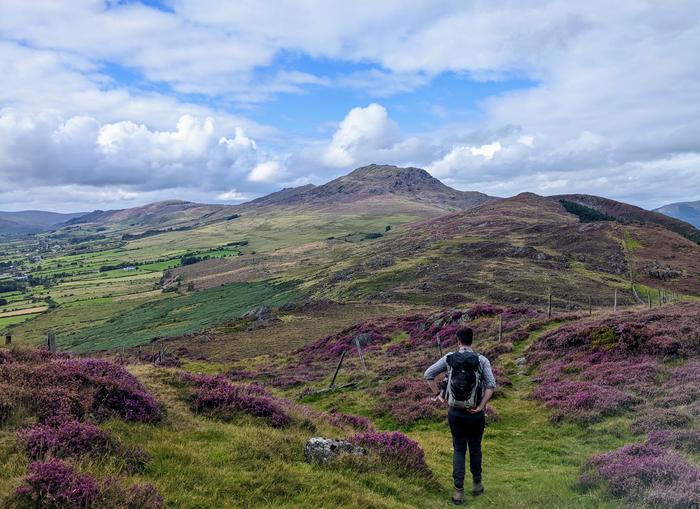
An international team of scientists studying rocks on Carlingford Mountain in Co Louth has challenged the long-established belief that volcanoes are fed by vast underground chambers of liquid molten rock.
The research, led by Trinity College Dublin, suggests that magma systems beneath volcanoes can switch between liquid-dominated and largely solid states, offering new insights into how volcanoes develop and ultimately erupt.
The findings are based on an examination of Carlingford Mountain, whose rocks are the fossilised remains of the underground magma system that fed an ancient volcano around 60 million years ago.
The study provides researchers with a rare opportunity to examine the internal workings of a volcanic system that would otherwise remain hidden several kilometres beneath the Earth’s surface.
Volcanoes have traditionally been depicted as having large underground reservoirs of liquid magma, connected to the surface by pipe-like conduits. However, emerging research has increasingly challenged this simplified model, suggesting that magma beneath many volcanoes exists instead as a mixture of crystals and smaller amounts of liquid rock.
The research team found evidence that the ancient Carlingford system alternated between these different states over thousands of years.
At certain stages, liquid-rich magma chambers were present, but these were interrupted by prolonged periods when the underground system consisted largely of crystals with relatively little liquid magma. The researchers compared this consistency to a slushy drink.
The findings suggest that changes between these states may create opportunities for more fluid magma to rise towards the surface and fuel volcanic eruptions.
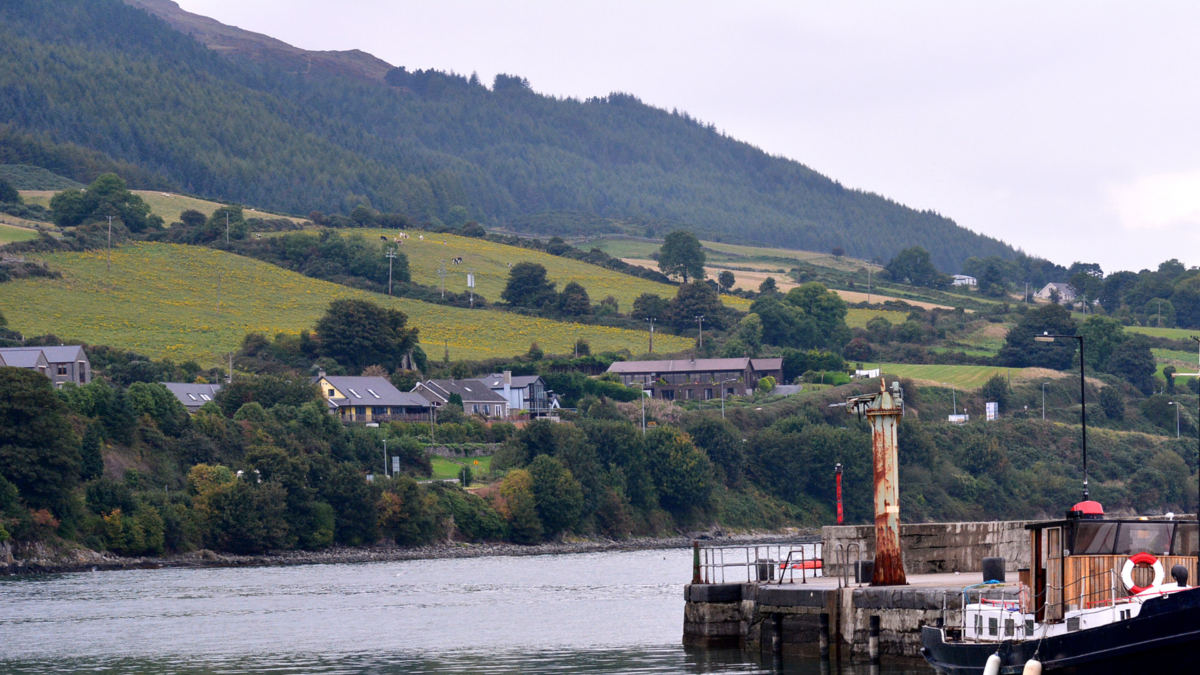
Carlingford Mountain offers a particularly valuable geological record because its volcanic system was formed by the same hotspot that currently supplies active volcanoes in Iceland.
Around 60 million years ago, tectonic plate movements associated with the opening of the Atlantic Ocean caused Ireland to move away from the hotspot. The volcanic system gradually cooled, solidified and became extinct.
Over subsequent millions of years, glacial erosion removed the overlying volcanic structure, exposing the rocks that once formed deep beneath the volcano and allowing scientists to examine its internal magma plumbing system.
The researchers studied rocks formed as magma accumulated beneath the volcano over thousands of years. By examining microscopic rock textures and the chemical composition of individual crystals, they reconstructed how the system evolved.
Jack Beckwith, a PhD student in Trinity’s School of Natural Sciences and lead author of the research, said the findings addressed an ongoing debate about whether magma exists beneath volcanoes as liquid-rich reservoirs or crystal-rich mixtures.
“Recent studies have shifted opinion towards the slurry model, but it is still not clear how this slow, crystalline magma erupts at the surface,” he said.
“At Carlingford, we see that magmas can actually switch between these two states over short periods in geological terms, creating opportunities for more fluid magmas to ascend and fuel eruptions.”
Dr Mike Stock, from Trinity’s School of Natural Sciences and principal investigator on the study, said understanding volcanoes remained difficult because scientists could not directly collect rock samples from several kilometres beneath active volcanic systems.
He said the ancient volcanoes preserved in Ireland’s geology offered an important opportunity to overcome that challenge.
“This study shows that ancient extinct volcanoes in Ireland can provide really important new insights,” he said.
“Thanks to glaciers eroding away their overlying rocks, we’re able to directly see inside their magmatic plumbing systems. They are perfect analogues for their younger brothers and sisters on modern-day Iceland.”
The international research team also included scientists from the United Kingdom, the United States and the Geological Survey of Northern Ireland.
The findings highlight the importance of Ireland’s geological history in understanding volcanic processes and could help improve scientific understanding of how active volcanoes evolve, store magma and eventually erupt.
Share this WeathÉire story: