




Scientists Create Mini Fireballs to Solve Cosmic Mystery
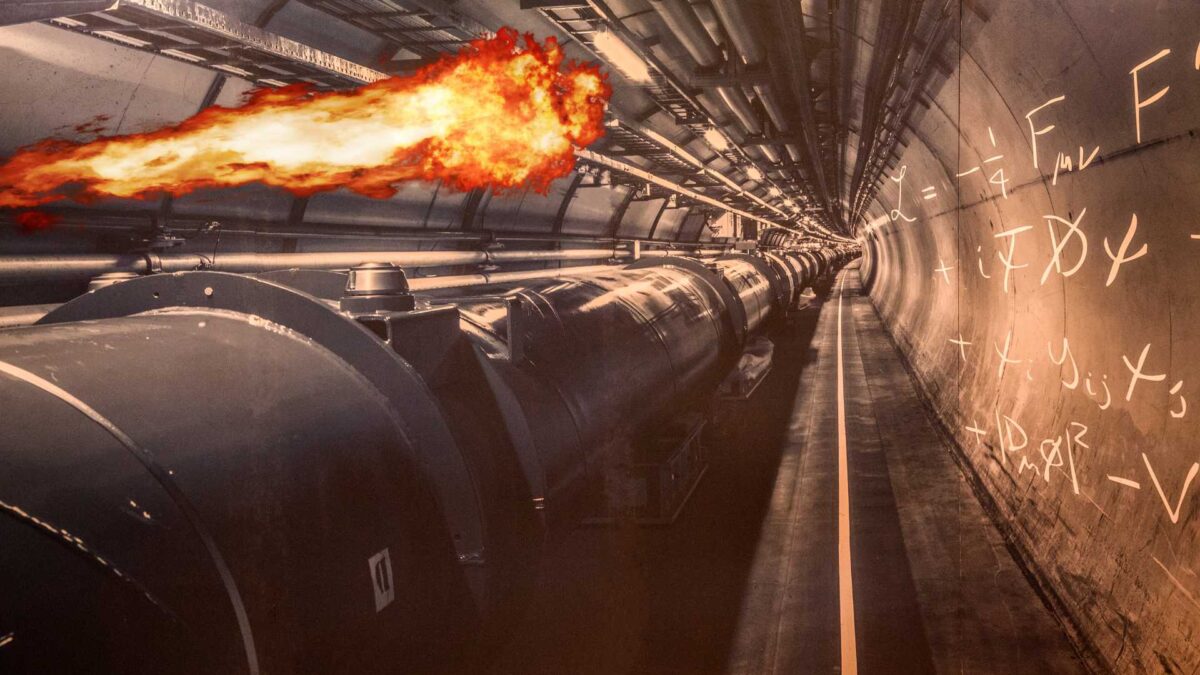
Scientists from the University of Oxford and international partners have created tiny plasma “fireballs” at CERN in Geneva, marking a world first.
Their experiments could help solve a decades-old cosmic puzzle about missing gamma rays and hidden magnetic fields in space. The results are published today in PNAS.
Blazars are distant galaxies powered by supermassive black holes that shoot out powerful jets of particles and radiation at almost the speed of light. These jets release extremely high-energy gamma rays, which are detected by telescopes on Earth. But lower-energy gamma rays, which theory predicts should appear, have never been seen.
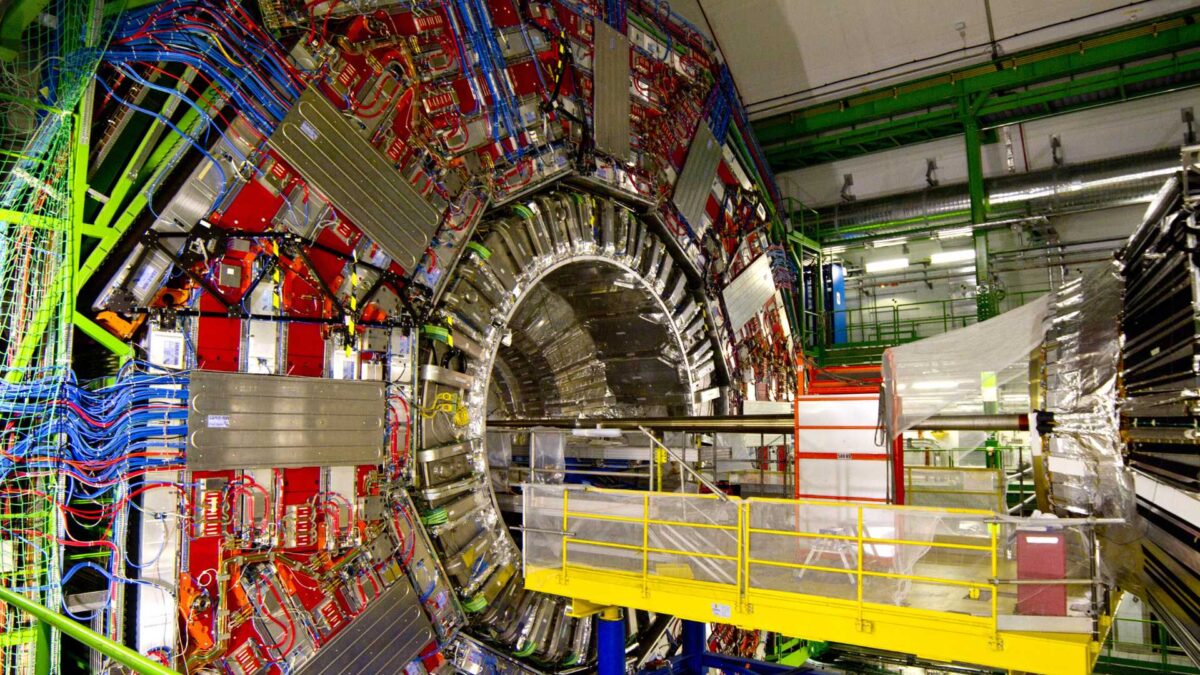
One idea is that weak magnetic fields in the vast space between galaxies deflect the gamma rays. Another suggests that the particle beams themselves become unstable, losing energy before reaching us. To test these ideas, researchers recreated the cosmic conditions in the lab. Using CERN’s Super Proton Synchrotron, they shot beams of electrons and their antimatter partners, positrons, through a plasma, mimicking a blazar jet in miniature.
The results were surprising. The beams stayed narrow and stable, showing almost no disruption. This means the missing gamma rays are unlikely to be caused by beam instability. The findings support the idea that invisible magnetic fields stretch across intergalactic space, possibly dating back to the early Universe.
Professor Gianluca Gregori from Oxford said, “This shows how laboratory experiments can help us understand objects billions of light years away. It also proves how powerful international collaboration can be in exploring extreme physics.”
The study raises new questions about how these cosmic magnetic fields first formed. Future observatories such as the Cherenkov Telescope Array may help scientists uncover their origins.
Professor Bob Bingham from STFC said, “By recreating these extreme cosmic conditions in the lab, we can study processes that shape the Universe and better understand the magnetic fields between galaxies.”
The research involved teams from Oxford, STFC’s Central Laser Facility, CERN, the University of Rochester, AWE Aldermaston, Lawrence Livermore National Laboratory, the Max Planck Institute for Nuclear Physics, the University of Iceland, and Lisbon’s Instituto Superior Técnico.
The study, Suppression of pair beam instabilities in a laboratory analogue of blazar pair cascades, is published in PNAS today.
Share this WeathÉire story: