


Met Éireann Scientist Helps Uncover Looming El Niño Shift
A new international study co-authored by Met Éireann climate scientist Tido Semmler has warned that one of the planet’s most powerful climate systems, the El Niño-Southern Oscillation (ENSO), could undergo a major transformation within the next few decades as global temperatures continue to rise.
Published in the journal Nature Communications, the study involved researchers from South Korea, the United States, Germany and Ireland. It found that greenhouse gas warming could trigger a tipping point in the tropical Pacific Ocean, making El Niño and La Niña events stronger, more frequent and more predictable by the middle of this century.
Using high-resolution global climate models, the scientists project that the ENSO cycle could shift from its current irregular pattern to one of highly regular oscillations, with larger fluctuations in sea surface temperatures. The shift could reshape global rainfall and temperature patterns, with impacts reaching as far as Europe.
Dr Semmler of Met Éireann said the study helps clarify how a warming climate could influence weather systems that have far-reaching consequences, including for Ireland. While Ireland is thousands of kilometres from the Pacific, ENSO events influence global atmospheric circulation, which in turn affects European weather patterns.
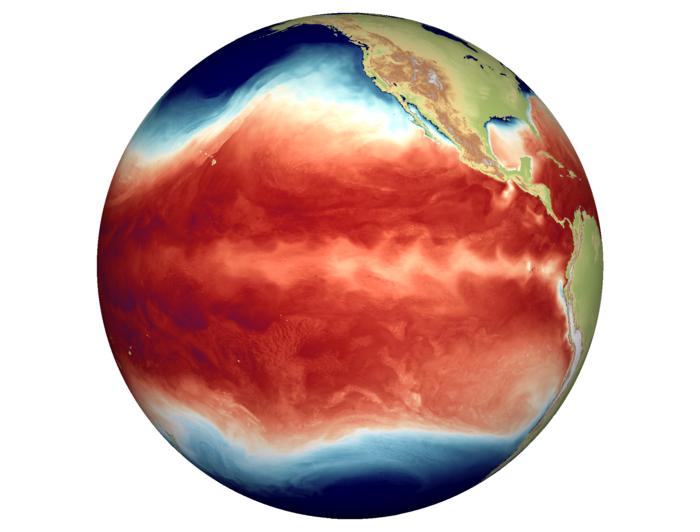
“In a warmer world, the tropical Pacific can undergo a type of climate tipping point, switching from stable to unstable behaviour,” said Professor Malte Stuecker, lead author of the study and Director of the International Pacific Research Center at the University of Hawai‘i. “This is the first time such a transition has been clearly identified in a complex climate model.”
The research also suggests that El Niño and La Niña could increasingly align with other global climate systems, including the North Atlantic Oscillation, the Indian Ocean Dipole and the Tropical North Atlantic mode. That synchronisation could amplify weather extremes such as droughts and floods, with scientists warning of greater risks of “hydroclimate whiplash” in regions like Southern California and the Iberian Peninsula.
Professor Axel Timmermann, Director of the IBS Center for Climate Physics in South Korea and a co-author of the study, said the findings show that “the increased regularity of ENSO could improve seasonal climate forecasts, but its amplified impacts will require stronger adaptation and planning worldwide”.
The researchers say the findings underline the growing urgency for global climate preparedness. “Our results highlight the potential for human-driven climate change to fundamentally alter global weather systems,” said Professor Timmermann. “That will have cascading effects on ecosystems, agriculture and water resources well beyond the tropics.”
Share this WeathÉire story: