



Met Office’s Forecasting Tech Turns 60

The Met Office has marked 60 years since it issued its first operational computer-generated weather forecast, a milestone that transformed meteorology in the UK and globally.
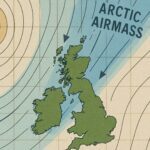
On 2 November 1965, the Met Office used the English Electric KDF9 computer to produce its first numerical weather prediction (NWP) forecast. The event was widely covered in the media and signalled the beginning of a new era in forecasting, driven by computing power and scientific modelling.
The anniversary highlights the evolution of NWP from early experiments in the 1950s to today’s high-resolution, cloud-based systems. Initial research was led by scientists including Fred Bushby and Mavis Hinds, who used the EDSAC computer at Cambridge to test basic forecasting models. By 1959, the Met Office had installed its first dedicated NWP computer, the Ferranti Mercury, at Dunstable.
The 1965 breakthrough at Bracknell paved the way for decades of innovation. The Met Office introduced increasingly sophisticated models and computing systems, including the IBM 360/195 in 1971 and the Unified Model in 1990. Forecast resolution improved from 90 kilometres in 1991 to 10 kilometres by 2017.
In recent years, the Met Office has adopted supercomputing and cloud technology to enhance forecasting accuracy and speed. In 2025, it became the first national meteorological service to operate a fully managed cloud-based supercomputer, developed in partnership with Microsoft.
Numerical weather prediction now underpins all Met Office forecasts, including the National Severe Weather Warning Service. It supports emergency response, public safety and climate research, and plays a key role in international collaboration.
Share this WeathÉire story: