




Laser-Driven Nanocraft Could Explore Black Hole
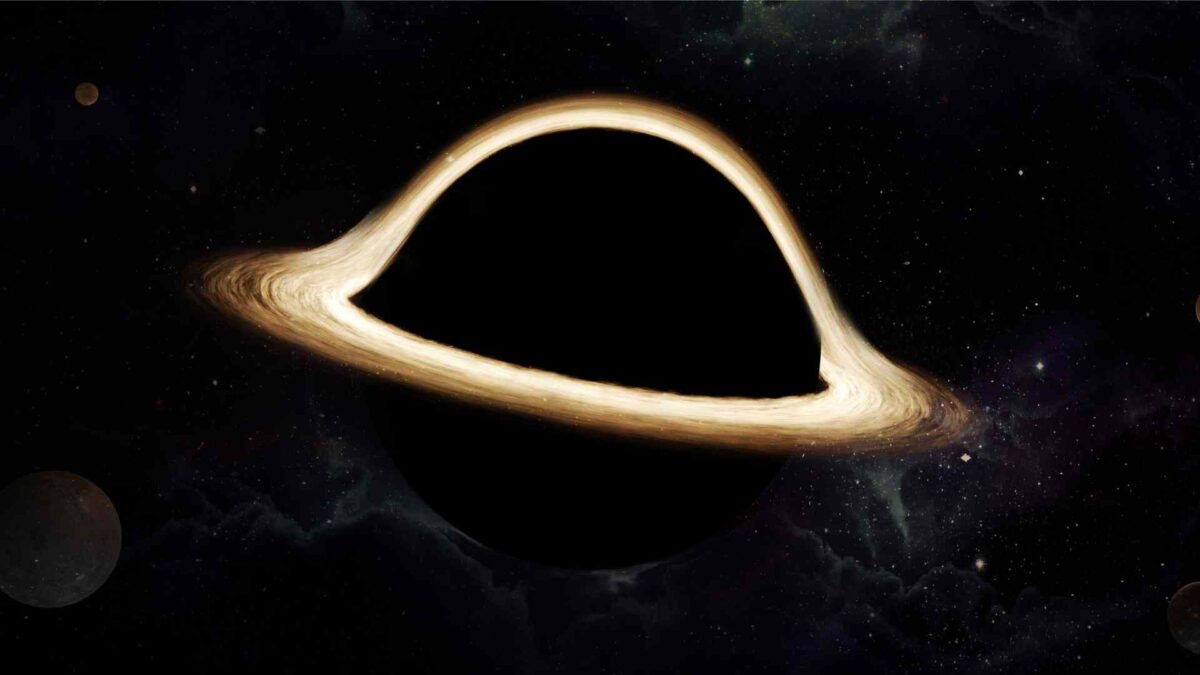
A spacecraft no heavier than a paperclip could one day be sent on a journey to a nearby black hole, powered not by fuel but by lasers. It sounds like science fiction, but astrophysicist Cosimo Bambi of Fudan University in China believes such a mission could become reality within a few decades.
Writing in the journal iScience, Bambi has outlined a concept for launching a gram-scale spacecraft toward a black hole 20 to 25 light-years from Earth. The mission would test the laws of physics under the most extreme conditions in the universe and potentially return data that could reshape our understanding of general relativity.
The proposed spacecraft, known as a nanocraft, would be equipped with a tiny microchip and an ultra-light sail. Rather than relying on chemical propulsion, the craft would be pushed by a concentrated beam of photons from powerful ground-based lasers. Travelling at roughly one-third the speed of light, it could reach a nearby black hole in about 70 years. The data collected would take another 20 to 30 years to reach Earth, making the total mission duration close to a century.
One of the biggest challenges is identifying a suitable target. Black holes do not emit light, making them extremely difficult to detect directly. Scientists must instead look for signs of their influence on nearby stars or the way they bend light. Bambi is optimistic that a nearby black hole could be found within the next ten years using improved detection techniques.
The second hurdle is the technology itself. Building the nanocraft and developing the laser infrastructure to launch it are both beyond current capabilities. The laser system alone would cost around one trillion euros using today’s technology. However, Bambi believes that costs will drop and technology will advance enough within the next 20 to 30 years to make such a mission feasible.
If the mission were to succeed, it could help answer some of the most fundamental questions in astrophysics. Scientists could investigate whether black holes really have event horizons, whether the known laws of physics hold true in such extreme environments, and whether Einstein’s theory of general relativity needs to be revised.
Bambi acknowledges the boldness of the idea but points out that similar scientific goals once thought impossible have already been achieved. He notes that gravitational waves were long considered too faint to detect, yet they were observed a century after being predicted. Likewise, black holes were once invisible, but now we have seen their shadows.
This research was supported by the National Natural Science Foundation of China.
Share this WeathÉire story: